Author: Editor

Downhill from Here

As a result of Adam and Eve disobeying God, he kicked them out of the garden and instead of simply collecting the food they needed they had to work for it. Seems a bit vindictive? Well the reason given in Genesis is that they could no longer be trusted. They were likely to continue to disobey God and eat the fruit from the ‘tree of life’ This would apparently give them immortality. Whereas much later in the bible it is clear that this is ultimately God’s intention for humanity, they were nowhere near ready for it. Was (is) this a real or a metaphorical tree? There is no way of knowing, but the message is clear – disobeying God has consequences. We can once again use the child analogy; a child might be allowed to play unsupervised in the back garden provided he/she doesn’t try to climb the big tree. If he ignores this and is caught half way up he may no longer be allowed in the garden as he may be tempted to climb even higher next time, not understanding that he could fall and be badly injured.

So Adam and Eve end up working the land outside the protection of the garden. Things get worse! Their first children given the names Cain and Abel have a falling out – Cain is jealous of Abel because his offering to God was accepted and his (Cain’s) wasn’t. We aren’t told why this was the case but from the phraseology employed it seems likely that Abel offered the best he had but Cain offered second rate stuff. (This resonates with a passage we find in the last Book of the Old Testament – Malachi – where the people are castigated for bringing second rate offerings to God). The message couldn’t be clearer – only the best we have is good enough to offer back to God. But this is not the end of it. In a fit of jealousy Cain Murders his brother!

Needless to say, things didn’t go well for Cain. Of course God knew what he had done but despite this Cain tried lying to God – a really bad move – and so God banished him. There follows a plea from Cain that this punishment is too hard and God might as will kill him or someone else will. To prevent this God puts a ‘mark’ on Cain warning others not to harm him. It’s not clear what this mark was nor indeed who these potential killers were.

That brings us to another unanswerable question. Cain got married – who to? Well there are only two options: There were either other human beings on the earth with whom the decedents of Adam (those created in the image of God) mated, or the sons and daughter of Adam and Eve (we’re told that there were ‘many’) intermarried. That might be anathema to us today but in fact in most ancient societies marriage between close family members was not unusual and indeed not forbidden until the time of Moses, way in the future. In reality, either way, it doesn’t change the message – the uniqueness of humanity first created in Adam by God was and is inherited by all future generations.

What follows is a genealogy of Adam and Eve’s decedents. What seems remarkable is the ages to which some of these lived. Can we really believe that life expectancy could stretch to almost 1,000 years? While there are a lot of theories as to why we age, the biggest factor seems to be genetic – put simply certain genes switch off as we get older, so it is not beyond the realms of possibility that ancient civilisations did indeed live much longer lives than modern generations. Many generations later, the King of Egypt (Pharaoh) asked Jacob (the grandson of Abraham, who we meet in later posts) how old he was. he replied that he was 130 years old but that was nothing like as old as the age that his ancestors reached.

Next time we look at a couple of major events which are described later in the Book of Genesis, the flood (Noah’s Ark) and the Tower of Babel.

The Talking Snake

Last time we left Adam and Eve together in the Garden of Eden. Was this a real place or poetic licence? Well the Genesis story if pretty clear that God placed Adam and Eve in a ‘garden’. It certainly wasn’t some sort of formal garden as we might imagine but a space which was in some way protected in that they could live in it without fear and really without much to do apart from tend what was already growing and collect food from it. One could perhaps image it as some sort of ‘nursery’ where the newly created (whether this be in a physical or spiritual sense – see previous post) humans could develop and mature. The reference to them as being naked suggests a childlike naivety like that possessed by children. Certainly the impression that the story gives is one of an idyllic life without cares and responsibilities, just like that of young children in our society.

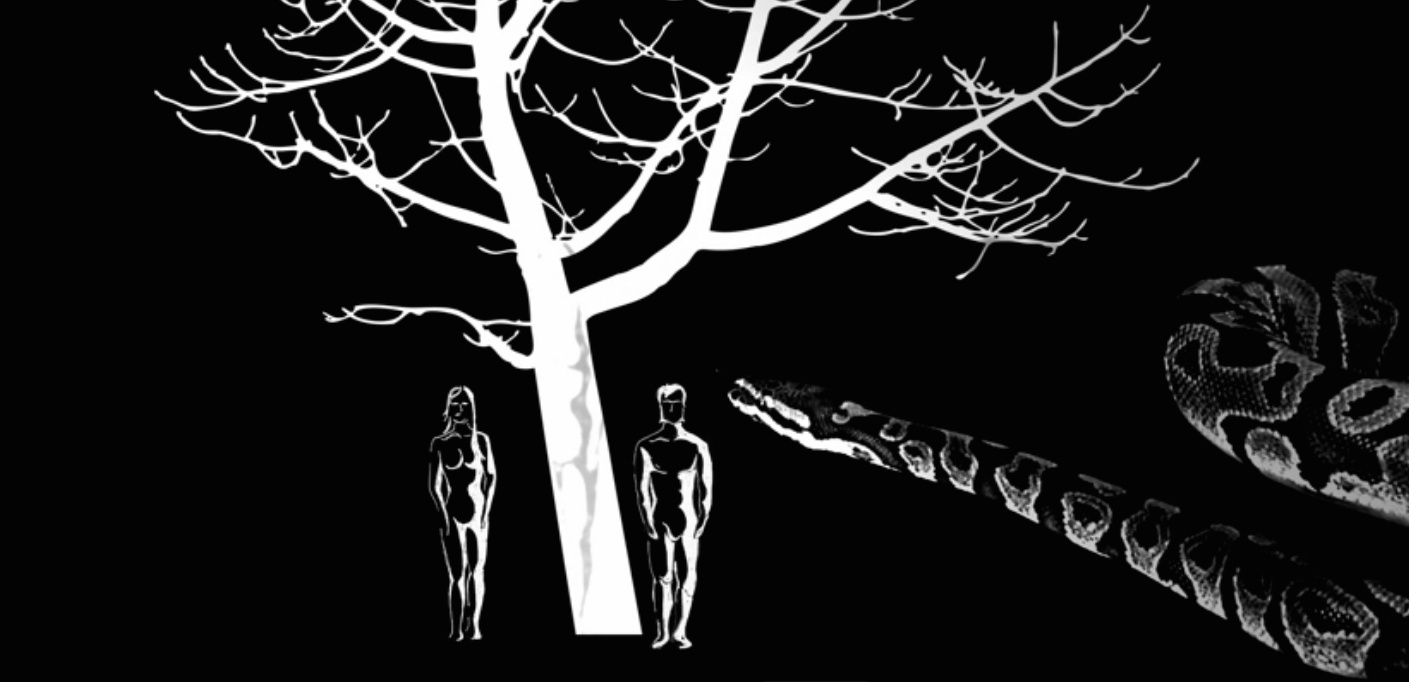
We are told that God gave then only one instruction – not to touch a particular tree in the garden. Enter the talking snake. Was there really a talking snake or imagery? Well there is no way of knowing. Again if you imagine a young child coming across a talking animal they would in all probability take it at face value – they wouldn’t know any different. However, it is not particularly important whether Eve had a conversation with a physical snake or not; the important thing is that she had an encounter with Satan (the devil). So where did he come from? There is no explanation in Genesis but what is clear is that Satan is not any sort of God alter ego, he is not an evil equivalent of God but a part of creation. A few verses later on God makes this absolutely clear. Much later on in the Bible there are references to Satan as a fallen angel: an angel who challenged God and was thrown out of heaven. The meaning of the word ‘satan’ is deceiver. He persuaded Eve to break the one rule that God had given her and Adam; not to eat from the particular tree. Again, are we really talking about an actual apple from an actual tree? It doesn’t really matter either way; the message is clear; God wasn’t just being perverse, Adam and Eve were not ready to handle an understanding of good and evil or mature enough to make the right choices. We can use the child analogy again – we might well tell our children that they can pick and eat the raspberries but under no circumstance should they eat the laburnum seeds (these are very poisonous). Adam and Eve lost their childlike naivety before they could handle it. That was Satan’s strategy – to disrupt God’s plan for humanity.

Next time we’ll look at the effects of this one act of disobedience

In the beginning……

In the last post on the subject of ‘The Bible’ we looked at the early chapters of the first book of the bible to demonstrate that the various books of the Bible must be read in context and giving due regard to the original target readership. However we also need to recognise that the Bible in it’s entirety is ‘the Word of God’; it was written by a multitude of different authors over several millennia; some of it is to be taken literally and some not. But how do we tell which is which?

In this post we will look a bit more closely at the early chapters of Genesis. WE established last time that the creation story wasn’t necessarily to be taken literally and we explained why. The essence of the creation story is that the world, indeed the universe, was created at God’s command, not by some mindless spontaneity. The mechanism by which it came into being is the domain of the scientist and not for consideration here. If we accept that then, also accepting that the initial readers (and indeed readers up until the middle of the second millennium) had no concept of a universe that didn’t have the earth at its centre , then progression of creation from the separation of dark and light right up to the creation of all living things is not really very problematical, remembering that the timescale is not intended to be taken literally. However, when we come to the creation of ‘man’ it does require a bit of unwrapping.

‘God created man in his own likeness’ (Genesis Chapter 1 verse 26). What does that mean? It is self evidence that humans as distinctly different from all other animals. Not genetically – humans and chimpanzees share 96% of the same genetic material and humans and chickens share around 60% of the same DNA! Nevertheless humans are very different from every other living thing in that we have the abilities; of reasoning and making decisions way beyond instinct, of abstract though, of perceiving the existence of God, of having the potential to become God like. That doesn’t necessarily invalidate the possibility of evolution as the mechanism as to reaching our physical form, but Genesis does make it clear that God created us with a distinct and separate dimension from the rest of creation. We call that ‘the soul’. From the Genesis story it seems that God created a male only. He then looked around for something else that he’d created to find the man a companion. How come? All other creature (with the odd exception) have both male and female so why only male humans? This part of the story is not primarily looking at procreation but at companionship – God created humans to be social not solitary. Did God really create a woman from Adam’s rib? There is no way of telling but the essence of this passage is that God created woman with the same spark of divinity as man. They were created equal.

Next time we’ll explore the ‘talking snake’

What is ‘The Bible’?

The Bible is not actually a book, it’s a collection of 66 books written by about 40 different authors over a period of around 2000 years. 39 of these books are what we call ‘The Old Testament, and 27, the New Testament (more about what Testament means later). It was around the middle of the 3rd century AD that the contenders for inclusion in the bible were collected together and about 400 AD before they were published as a single entity translated into Latin.

The Bible was never intended to be read from cover to cover like a novel or an academic treatise. It is not even altogether chronological. It is divided into categories; history, poetry, prophesy, law, stories of individuals, gospels (the life of Jesus), early church history, letters to the church and individuals, apocalyptic writings (more about this later).

So what’s the purpose of the Bible? Taken together, it chronicles human history from God’s perspective. It explains God’s vision for humanity, how the human race constantly moved contrary to this vision with disastrous effects, how time after time God tried various strategies to bring us back onto the right path and how we constantly returned to our old ways. Finally God came to earth in person in the form of Jesus Christ.

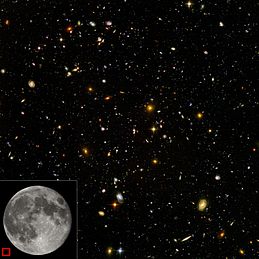
Is everything in the Bible true? – Well yes and no. The bible is ‘the word of God’. It was of course written down by human beings but they did so under the guidance and direction of God. However, this doesn’t mean that every word is to be taken literally or independent of context. Let’s take the creation story from Genesis as an example. Below is a pictorial representation of what the universe was believed to be like, not only at the time that the creation story was written but for 2,000 or more years afterwards. The creation story was intended to explain that the world didn’t just happen but was created as an act of will by God. Imagine how it would have been received if it had spoken of billions of galaxies, black holes, the earth as a tiny dot in a vast universe? Within the imagery of this story is the absolute truth that the universe was created by the will of God – that it didn’t just happen. The mechanism for this was well beyond the ability of the target audience to understand (and even today, our understanding is sketchy and constantly changing).

So how do we know which parts of the bible to take literally and which to consider in some other way? In future posts we’ll explore this as we look at different books of the bible in more detail but as a general principle; every part of the bible is important and has something to say to everyone who reads it.