The Bible Myth
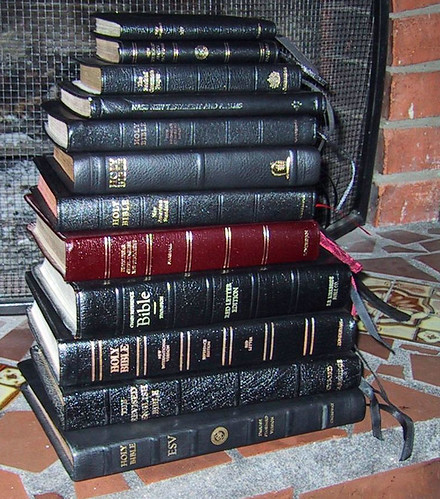
There are between 7 billion and 12 billion printed copies of the Bible worldwide with around 100 million printed every year. The complete Bible has been translated into more than 700 languages and substantial parts of it into more than 3,000 languages. It is far ad a way he most published ‘book’ in history.
And yet!!
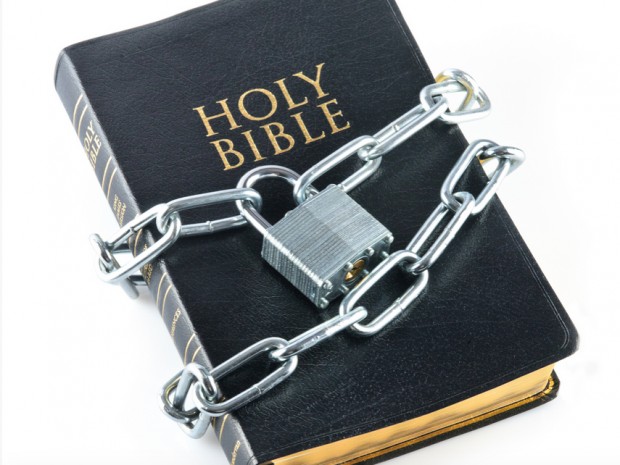
New data reveals that more than 500 million Christians worldwide face Bible access restrictions, as laws imposed by governments hostile to Christianity and socioeconomic barriers prevent many who would like a Bible from having one.
The Bible Access Initiative released its 2026 Bible Access List gives an updated look at Bible access around the world. The report examines 106 countries, identifying both places where Bible access is explicitly restricted and countries where people face socioeconomic barriers that prevent them from obtaining Scripture.
The report found that Afghanistan has the strongest restrictions on Bible access, followed by Yemen, Somalia, North Korea, Eritrea and Mauritania. The Bible Access Initiative classifies all six countries as having “maximum restrictions” on Bible access.
Turkmenistan, Libya, Sudan and Iran round out the top 10 countries with the strongest restrictions. Those four countries, along with Comoros and the Maldives, are categorized as having “extreme restrictions.”
Countries classified as having “severe restrictions” include Algeria, Tajikistan, Tunisia, Saudi Arabia, Djibouti, Niger, Burkina Faso, Uzbekistan, Pakistan, Kyrgyzstan, China, Morocco, Syria, Bhutan, Azerbaijan, Mali, Oman, Brunei, Myanmar, Nigeria, Kazakhstan, Qatar, Chad, Iraq, Central African Republic, Malaysia, Laos, India, Kuwait, Ethiopia, Cuba, the United Arab Emirates and Bahrain.
Mozambique, Bangladesh, Jordan, the Palestinian Territories, Vietnam, Nepal, Indonesia, the Democratic Republic of the Congo, Egypt, Cameroon, Venezuela, Togo, Turkey, Lebanon, Tanzania, South Sudan, Malawi, Guinea, Guinea-Bissau and Kenya are identified as having “considerable restrictions.”
Another group of countries, including Nicaragua, Russia, the Ivory Coast, Ukraine, Rwanda, Colombia, Uganda, Senegal, Madagascar, Sri Lanka, Benin, Angola, Sierra Leone, Mexico, Burundi and Liberia, are categorized as having “some restrictions.”
The restrictions extend beyond government bans or censorship. The report cites “persecution through government controls, extremist violence, and family and community pressure,” while also identifying socioeconomic barriers such as poverty, poor infrastructure, illiteracy, lack of electricity and limited internet access.
Bible shortages are particularly acute in the Democratic Republic of the Congo, Ethiopia, Nigeria and India, each of which has a shortage of more than 10 million Bibles, according to the report.
Uganda, Tanzania and China each have Bible shortages ranging from 5 million to 10 million. Indonesia, Angola and Mozambique round out the top 10 countries with the largest Bible shortages. Those countries, along with Malawi, Rwanda, Madagascar and Kenya, are each short between 3 million and 5 million Bibles.
Countries with Bible shortages of 1 million to 3 million include the Ivory Coast, Burundi, Zambia, Zimbabwe, Haiti, Cameroon, Cuba and Ghana. South Sudan, Chad, Benin, Burkina Faso, Egypt and the Central African Republic have shortages ranging from 500,000 to 1 million Bibles.
The report’s findings challenge the idea that the Bible is universally accessible simply because it can be found online or purchased in many parts of the world.
“We often hear that the Bible is more accessible than ever, but we must not confuse availability with access,” said Bible Access List co-creator Wybo Nicolai in a statement reacting to this year’s findings.
“Persecution-related Bible access restrictions can make accessing Scripture difficult or dangerous, while socioeconomic barriers can put a Bible beyond people’s reach,” Nicolai said. “Even where Scripture is available digitally, limited internet coverage or unsafe online environments can still prevent people from accessing it.”
In the west we take access to the Bible for granted. Many copies sit on shelves or in cupboards, unread and disregarded. If we do require access to a bible we can reach any number of translation online for free.
But almost eight times the entire population of the UK of our Christian brothers and sister across the world either have no access or very limited access to the Bible.